
There is one thing I would like to make clear from the start: the men I see in my office are the ones who have already taken the step. The ones still held back by the fear of pain, I have not met yet. They stay home, they postpone, they read horror stories online — and sometimes they wait two, three, five years before making up their minds.
This article is for them.
I am not going to tell you that a vasectomy feels like nothing at all: that would be dishonest, and you would not believe me anyway. Instead, I will explain in detail what actually happens — what is normal to feel, what you will not feel, what can hurt when it does hurt, and above all why the gap between one experience and another has far more to do with where and how the vasectomy is performed than with the vasectomy itself.
The question everyone asks: "is it going to hurt?"
It is by far the number one question. It often comes with a story attached: "my neighbour's testicles turned completely blue", "a guy at work was flat on his back for three weeks".
When I ask these men where their neighbour or their colleague had the procedure, the answer is always the same: never at our clinic.
That does not mean complications do not exist. They do, and there are ways to prevent and treat them. But it does mean something important: a vasectomy is not a standardized procedure. The techniques — the anesthesia, the approach to the vas, the way the passage of sperm is blocked — can vary from one physician and one clinic to the next. The physician's experience varies. The protocols vary. And the time given to each patient has to be adaptable, even if most of the time it is fairly quick.
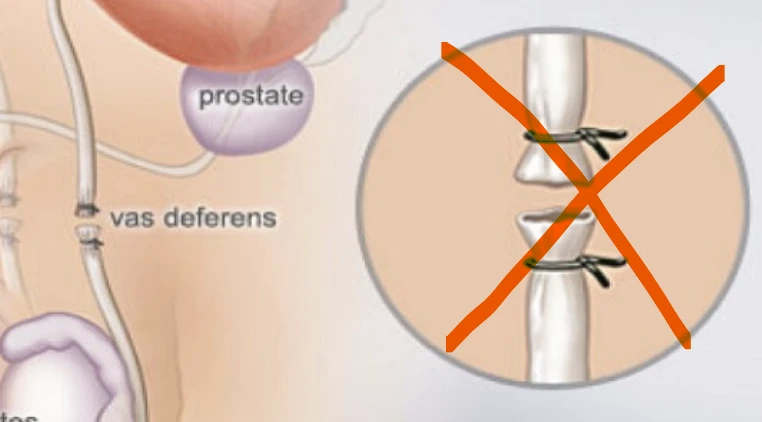
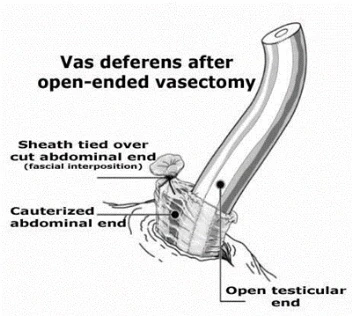
Before I entered the world of vasectomy, I did not suspect myself how wide those variations were. One example always surprises people: a vasectomy done by simple ligation of the vas carries a failure rate that can reach 5%. When you choose a contraceptive, you want the most effective one there is. The technique of mucosal cautery combined with fascial interposition — the one we use — is 99.9% effective after confirmation by a semen analysis. Unfortunately, this technique is not mastered by everyone who performs vasectomies. I go through the studies behind these numbers in a separate article on the scientific evidence.
Remember this: when you read a negative account, you are not reading an account of "the vasectomy". You are reading the story of one vasectomy, performed in a particular setting, with a technique that is often unknown. It is not your vasectomy.
What you will actually feel during the procedure
Let's break it down step by step.
The initial examination. It is perfectly normal for more private people to feel intimidated by how intimate the examination is. I examine the scrotum while you are standing or lying down: I palpate the testicles and locate the vas deferens. This step is essential, because it is what tells me what I am dealing with — what type of vas, the type of skin, the flexibility of the tissue (easy, moderate, difficult, not feasible).
In some more anxious men, the cremaster muscle contracts very strongly. That is a completely normal protective reflex, but it can make both the examination and the procedure more difficult. It is one of the reasons we offer an anti-anxiety medication, which helps these muscles relax. We can also use heat to release the muscle tone before the procedure, for those who need it. The nurse then performs the disinfection.
The anesthesia. This is the moment many men dread, and it is also where technique makes the biggest difference. Because a vasectomy is a minimalist procedure, there is no need to numb the entire scrotum: there is a safe zone where the vas lies close to the surface.
With needle-free anesthesia, the anesthetic mixture is propelled into the tissue under pressure. You feel a small flick — a brief, dry sensation, not a puncture. Men who are afraid of needles appreciate this approach. With the micro-needle, the sensation is that of a very fine prick; the published data on this approach are reassuring.
I adapt the choice and the dose to the tissue, which is thicker in some men than in others. There is no single recipe.
We also use what I call "verbocaine": verbal distraction. This is not a gimmick. Talking with the patient, getting him out of his own head, occupying his attention — it genuinely changes how pain is perceived.
One observation: the men with the most apprehension are the ones who react the most; they are in a state of hypervigilance regardless of the technique used. Anxiety is not a peripheral detail. It is one of the main modulators of sensation, which is why we treat it as a clinical element in its own right. We have become masters in the art of distraction, and we enjoy learning from you on all sorts of subjects.
During the procedure. Once the anesthesia is complete, many men are frankly astonished to feel nothing. It is the comment I hear most often on the table. Here is what you may feel, and what is normal:
- A sensation of pressure when I push the vas up under the skin.
- That sensation of pressure can be felt at the testicle, even though I do not touch the testicles during the procedure.
- Touch and movement on the rest of the scrotum: the local anesthetic targets the working area, not the whole sac.
- Sometimes a pulling sensation in the groin or lower abdomen, because of the anatomical connections of the vas deferens.
These sensations are unusual, but they are not painful. Knowing about them in advance changes a great deal: what worries people is not the sensation, it is the unexpected sensation.
For the more difficult cases. For a very tight scrotum or a very anxious patient, additional options exist: an anti-anxiety medication on site, or more advanced sedation and analgesia such as Penthrox (additional fee).
The factor nobody talks about: time
I have seen clinics where the throughput of vasectomies was so fast that the anesthesia was only partial, and where some men appeared uncomfortable. Not out of incompetence — out of volume pressure. When every minute counts, the step that gets compressed is the waiting time between the injection and the incision. Yet some people are slower to freeze, and we take that into account.
I take the time each particular situation requires. Your comfort is a priority, and we have documented in detail what we put in place to ensure it.
After the vasectomy: what to expect, hour by hour
- The first 2 to 4 hours: the local anesthetic is still active. You feel almost nothing.
- The first 24 hours: you wear a compression dressing. Stay lying down for the first 6 hours — this is not a suggestion, it is the window in which hemostasis happens.
- When the anesthetic wears off: a feeling of heaviness in the scrotum is normal. By then, healing is already underway. The normal discomfort is mild, moderate at most, and is easily managed with acetaminophen (Tylenol). I have also written a separate article on preventing post-operative pain.
- Ice: an ice pack on the scrotum, 3 to 4 times on the first day, 10 to 15 minutes each time.
- The bluish colour: an expected phenomenon, not a complication. The scrotum may swell moderately — especially if you are on your feet more often — and take on a partial bluish colour. It fades within 7 to 15 days. Genuinely "blue balls", on the other hand, could indicate more significant bleeding.
Avoid aspirin and anti-inflammatories such as ibuprofen during the first 48 hours, because they thin the blood.
The duration varies a great deal. Some men mention barely 2 days. Others, one to two weeks. There can be a peak of discomfort on days 3 and 4 that improves within a week. The return to activity is gradual. Roughly 5 to 10% report mild discomfort that stretches over a month, and it is normal to feel slight pulling when changing position. The first few ejaculations may also be tinged with blood, often brownish in colour. That is normal.
Why the instructions are not suggestions
Here is the most useful observation I can pass on to you: roughly one problem in two occurs in a patient who did not follow the instructions.
The classic trap is feeling fine on day 3 and returning to activity too quickly. You lift something, you go back to training, you resume sexual activity too soon. The result: bleeding or inflammation that causes pain and extends the recovery by several weeks.
To understand why, you need to know that healing happens in four phases.
- Phase 1 — Hemostasis. The vessels contract to limit blood loss, platelets are recruited to the site and form a fibrin mesh over the tissue. That clot is fragile. This is exactly why we ask you to stay lying down for the first 6 hours.
- Phase 2 — The early inflammatory response. In the hours that follow, neutrophils arrive in large numbers. They stay 2 to 5 days and clean the wound by eliminating bacteria, which prevents infection. This phase is what produces the local warmth, redness and discomfort. It is not a problem: it is the process working.
- Phase 3 — The late inflammatory response and proliferation. After about 3 days, macrophages take over. As well as cleaning, they secrete the growth factors and cytokines that drive the rest of the healing.
- Phase 4 — Remodelling. This maturation phase begins around day 20 and can extend over months, sometimes up to 12 months. Collagen fibres reorganize to maximize the tensile strength of the tissue. By this stage, your symptoms are usually resolved.
See the problem: days 3 to 5 are precisely when you feel better, and also when the tissue is still in the middle of reorganizing. It is not yet the time to test your limits. Go gently.
The instructions that follow from all this:
- Physical effort: for 1 week, avoid lifting more than 10 kg, standing for more than 2 hours, squatting, climbing, jumping and shovelling. Limit stairs.
- Sexual activity, including masturbation: after 5 to 7 days. This is probably the most-broken instruction, and the one that generates the most complications I see.
- Scrotal support: wear supportive underwear or a soft athletic support for 7 to 10 days. The goal is simple: to stop the weight of the testicles from pulling on healing tissue. It is probably the tip with the best effort-to-benefit ratio of the whole recovery.
- Shower and bath: shower 24 hours after; bath 48 hours after, and only if the wound is fully closed.
- Work: remote work the next day, back to the office after 48 hours.
- Contact sports: 2 weeks.
And one instruction that has nothing to do with pain but is critical: a vasectomy is not effective immediately. Sperm can survive for several weeks. Until sterility is confirmed by a semen analysis, consider yourself fertile.
Let's talk frankly about the complications that can be painful
I do not want to minimize. Here is what can happen and what we do about it.
Post-vasectomy pain syndrome. This is the complication that frightens people most, and it is the one where I most disagree with what patients are sometimes told. One account particularly struck me: a man consults his urologist about a painful lump and is told that it happens in 10% of cases and that nothing can be done. I do not share those statistics and, above all, there are options: it is not a foregone conclusion.
Recognized data and protocols exist for managing this condition. We apply them, and we encourage proactive pain management to prevent it becoming chronic — because acute pain that is treated well is far less likely to become chronic pain. The available literature is more nuanced than what circulates. Most post-vasectomy pain syndromes improve with treatment and with time.
Hematoma (the "third testicle"). Our hematoma rate went from 1% to under 0.5% with experience, thanks to the precautions we put in place to detect any low-grade bleeding and to the use of bipolar cautery when required.
Congestive epididymitis. In men who produce a larger quantity of sperm, these small cells can build up around the testicle, in the epididymis. Men then present with a painful lump near the testicle. Our conservative treatment protocols are effective if they are properly applied.
Granuloma. An acute granuloma is a painful lump on the vas, probably caused by micro-bleeding. Blood is very irritating to tissue and causes additional inflammation.
We changed our materials because of our patients. We previously used a titanium clip to secure the fascial interposition. Patients reported feeling the clip in the first few weeks, and some could even palpate the small piece of metal in the tissue of the scrotum. We switched to a dissolvable suture, a gentler method that takes one to two minutes longer. Since then, we have seen fewer granulomas and faster recovery.
That is the kind of improvement that only happens if you genuinely listen to what patients report — and if you are willing to question a technique you have already mastered.
Follow-up: the part people forget to compare
Our patients have physician support 7 days a week for any concern after the vasectomy, and the follow-up visit is free of charge.
We regularly see patients from other clinics who, dealing with a complication, try without success to reach the physician who operated on them and turn to us instead. Even a minor complication becomes a negative experience when nobody answers the phone.
How to read the accounts you find online
There are Facebook groups and Reddit threads where men share their experience — and where negative experiences are generally overrepresented. Two things to keep in mind.
Publication bias. Men for whom everything went well have no reason to write a long account. The one who is suffering does. What you are reading is not a representative sample: it is a sample of the problem cases.
Technical variation and experience. Some accounts are troubling and genuinely concern me. My hypothesis is that the expertise and the techniques are not the same; nor do we know whether the patient was at higher risk. The context is different from yours.
That does not mean you should ignore these accounts. It means you should ask yourself the right question. The right question is not "does a vasectomy hurt?". It is "does that particular clinic do it well?".
The questions to ask before choosing a clinic
- How many vasectomies have you performed? For how long?
- Which occlusion technique do you use, and what is its failure rate?
- Which anesthesia method do you offer, and do you have more than one option?
- What is your hematoma rate?
- What happens if I am more anxious than most?
- Who can I reach if I have a problem on a Saturday night?
- Is follow-up included? Are there additional fees?
If a clinic cannot answer these questions, that is information in itself.
Note as well that the factors influencing complications and effectiveness are documented: sterilization and preparation protocols, occlusion technique, the physician's experience — and even, according to a study published in JAMA Surgery, the surgeon's sex. I pay attention to the details that make a difference for the patient, and I aim for the best possible contraception for every person who comes in for a consultation.
An honest comparison with the other options
I insert IUDs. I perform vasectomies. So I can compare the two with a minimum of objectivity.
Inserting an IUD is relatively easy after childbirth, with some lower abdominal cramping, because the cervix is soft. Outside that context, it is more painful for many women, and the tools to prevent that pain remain limited and sometimes difficult to put in place in many settings. Many women also experience hormonal side effects and are looking for non-hormonal alternatives.
I have to admit it humbly: it is easier to properly prevent procedural pain during a vasectomy than during an IUD insertion.
Compared with the other form of permanent sterilization, tubal ligation, the contrast is even sharper. A vasectomy is far simpler, less invasive, less risky; the recovery is faster and it requires fewer resources.
The drawbacks of a vasectomy have to be named too: it must be considered permanent and irreversible, and it is not effective immediately.
And the cost
It is easy to forget the monthly cost of contraception. Over the years, it adds up to a significant amount. Add the time spent going to the pharmacy and to medical appointments. There is also the cost of spending months on a waiting list. The full calculation, with the numbers, is here.
Even at $690, the return on investment is excellent. And I have seen too many women face an unwanted pregnancy for lack of access to effective contraception.
Contraception is a team sport
Close to a third of the requests we receive are initiated by the partner. That is hardly surprising: she is often the one who has been managing contraception for years.
A vasectomy rarely comes out of nowhere. There is almost always a trigger: the last baby, a contraceptive that is poorly tolerated or becomes contraindicated after a change in health, the end of an IUD, a separation, a surprise pregnancy. I recently saw a couple who had been through an abortion a few days earlier. That ordeal had been difficult; the vasectomy, by comparison, was a far easier procedure.
When a man takes charge of this step, his partner is freed from the contraceptive burden she has often carried for ten or fifteen years. He is also a man protecting his partner: a responsible man, taking control of contraception.
Getting ready: what you can do yourself to optimize healing
One week before:
- Avoid smoking and drinking alcohol.
- Avoid blood-thinning medication (anti-inflammatories, aspirin, or over-the-counter products containing them).
- Plan your recovery: 2 days of rest, 1 relaxed week without physical exertion, 2 weeks without contact sports.
- Get yourself supportive underwear or a non-rigid athletic support (jock strap).
- Arrange for someone to come with you. Even if you are able to drive, having a driver is safer.
The day before or the same morning: shave the scrotum, or trim the hair very short (1 mm).
On the day: wash normally, wear your supportive underwear, eat breakfast normally. If you are nervous, you can take 2 tablets of Gravol 50 mg for their anti-anxiety effect — but do not drive under that medication. You can also ask for medication available on site. To take it, plan to arrive 30 minutes early and mention it as soon as you get there.
Immediately after: go straight home and stay lying down or seated for the next 3 to 6 hours, with ice close at hand.
What I say to the man convinced he will "react badly"
I remember a gentleman who wanted a vasectomy and who said no just as I was starting the procedure. I stopped. He confirmed that he wanted his vasectomy. We start again, and it happens again.
I could feel how nervous he was — his head said yes, then no. I gave him a moment to let the emotional intensity come down. We were then able to continue with his consent, the nurse present and reassuring at his side.
After the procedure, he apologized profusely and thanked us several times for our professionalism and our patience. We then understood that his reaction had nothing to do with the vasectomy as such: it was the reaction of a post-traumatic stress state linked to an entirely different procedure, following a traumatic accident.
I tell this story because you have the right to say no at any moment. We stop. We wait. We start again when you are ready. Nobody is judged.
And the usual ending is the one I see every day: the men who are most anxious beforehand become relaxed and proud. They are pleased to have felt nothing and surprised by how quick and simple the procedure is.
The other fear, the one we talk about less
Behind the fear of pain there is often a deeper fear: that of no longer being quite the same man. Let's set that straight.
- The testicles continue to function normally.
- No hormonal change is caused by the vasectomy. Your testosterone does not move.
- A vasectomy does not touch the vessels responsible for erections.
- Visually, ejaculations stay the same. Sperm makes up a tiny fraction of the volume — I go into the details in this article on ejaculation after vasectomy.
- There is no impact on orgasm. This is documented in the literature, including recently.
A vasectomy cuts each of the small tubes, about as thick as a strand of spaghetti. These 2 mm ducts are safely accessible in the upper zone of the scrotum. Their only role is transporting sperm, which mixes with semen in the lower abdomen. That is all. It touches nothing else. Your virility will not be affected.
In summary
If you have been putting off your vasectomy for two years because of the pain, here is the sentence I would like you to take away: a vasectomy is simpler than you think.
What actually hurts is almost never the procedure itself. It is anesthesia done too quickly, a lack of information, instructions that were not followed, or a complication left unanswered because nobody calls back. Those four things are avoidable.
Your next step is not to make a final decision today. It is to start the conversation with your partner, or simply to ask your questions to someone who has the time to answer them. Many answers are already in our FAQ. A consultation commits you to nothing, and if your situation is unusual, that is exactly the moment to discuss it and build a plan together.
Written and reviewed by Dr Mélanie Savard-Côté — July 2026. This article is provided for informational purposes and does not replace personalized medical advice.